

- Sealy's uniqueness
- Health
- Smart tips
Best sleeping positions for back pain
Sleeping with backache and general pain is an all too common experience. According to our Sleep Census, 3 in 5 people have woken up with back pain at some point in their lives. Back pain is highly prevalent among older adults. A recent 2024 survey by Hong Kong Sanatorium and Hospital found that 48% of older adult respondents in Hong Kong reported musculoskeletal back pain, making it the most common complaint.
While this can be a debilitating condition, there are several sleeping positions that can alleviate discomfort. Our article explores these positions, along with the types of back pain you may experience and tips to improve your comfort while you sleep.
Types of back pain
In a broad sense, there are two types of back pain that you may experience: acute or chronic. Acute back pain is usually a short-term experience that lasts a few days to several weeks. This kind of pain comes on suddenly, and is often a result of injury.
On the other hand, back pain is classified as chronic if it continues for more than three months. Chronic pain may not have an identifiable cause. This pain may also come and go on a regular basis, affecting your daily mobility and long-term health.
Back pain associated with sleeping may be present during the night and throughout the following day, and is most commonly felt in the middle and lower back. Adjusting your sleeping position may be of significant relief; however, please note that if you are experiencing back pain of any kind, it is best to speak with a medical professional.
Best sleeping positions for back pain
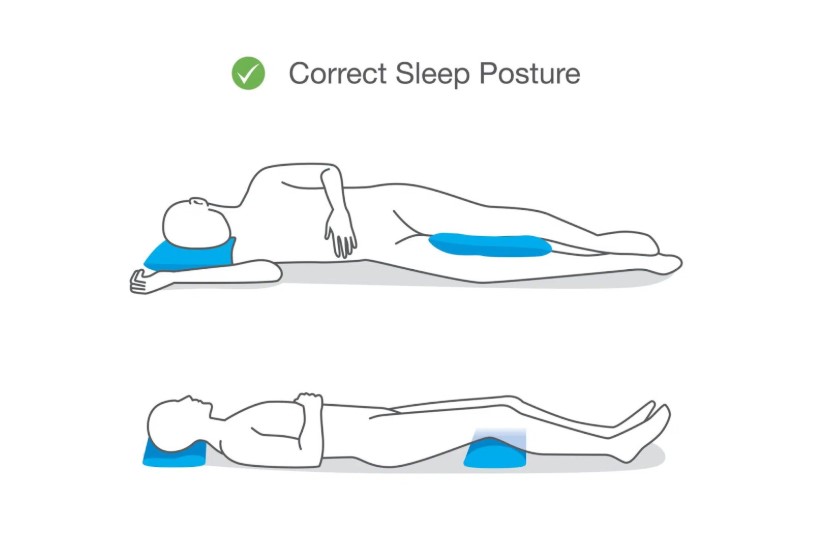
The most common sleeping positions are on the side, front or back. While you may have a preference for sleeping in a particular way, lying on your side or your back is better for spinal health than lying on your stomach. Regardless of which position you choose, however, there are ways to use cushions to help alleviate pain throughout the night.
1. How to sleep on your side
This is the most popular sleeping position according to our data — 44% of HK people agree that they prefer to sleep on their side. It is also the most ideal position for those experiencing back pain.
To ensure this position does not contribute to any discomfort, begin with a pillow suited for side sleeping. A contour pillow is designed to support your head, neck and shoulders, alleviating muscular tension and strain.
Your mattress should also have appropriate cushioning for the hips and shoulders to prevent tossing and turning during the night. For added comfort, try bending your knees slightly and placing a pillow between your legs. Doing so can take pressure off your back.
2. How to sleep on your back
There are numerous benefits to sleeping on your back, including reduced joint and muscular pain. You may find that this is more comfortable if you have a firm or medium mattress, although pregnant women and sufferers of respiratory illnesses may not be suited to sleeping this way.
Similar to side sleepers, people who sleep on their back should opt for a specific shape of pillow. In this case, choose a pillow that keeps your head, neck and shoulders in line with your back and hips. Your head should not be raised too high or dip too low; otherwise, you may experience aches and discomfort.
As an added protection against back pain, try lying with a pillow under your knees. Doing so helps to maintain spinal alignment for some individuals. You may also place a rolled towel under the waist for added support.
3. How to sleep on your stomach
If you sleep on your stomach, you may be more susceptible to back pain unless you have a supportive mattress. When lying on your front, your hips sink downwards, causing spinal misalignment and muscular strain. A medium to firm mattress may be preferable in this case; choose a mattress that offers responsive support technology and actively maintains correct posture while you sleep.
In addition, you can combat this problem by placing a pillow under your hips and pelvis, helping to prop up your midsection and maintain spinal alignment.
Your neck is also likely to feel uncomfortable in this position unless you have a suitable pillow. Try a soft, thin pillow that keeps your head close to the mattress. If your pillow is too high or too firm, your head is likely to be angled upwards, causing neck and back pain.
Can your mattress cause back pain?
A poor sleeping position or inappropriate pillow are well known as causes of back aches and pains, but your mattress may be equally to blame. Consider whether your mattress is old, poorly made or designed without spinal health in mind.
Without a supportive mattress, you may experience spinal misalignment during the night and often for many hours. This, in turn, causes the surrounding muscles to become strained. You may also find yourself tossing and turning if the mattress lacks sufficient pressure relief.
We know from our extensive research with The Orthopaedic Advisory Board that a firm mattress is not always the solution for back pain.
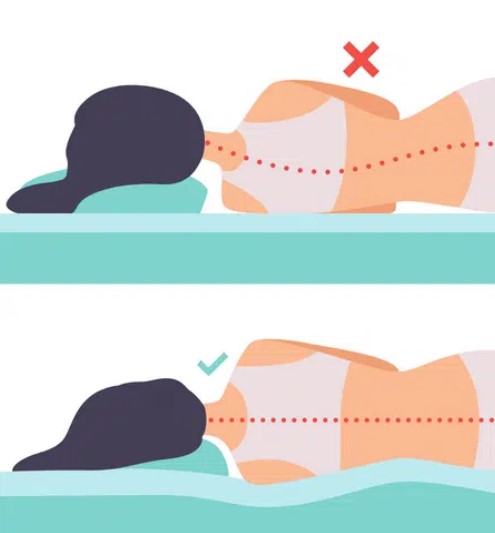
Side sleepers, for instance, often benefit from a mattress with added cushioning or plush layers. This allows the shoulders and hips to sink in while the back remains supported. Back and stomach sleepers tend to prefer firmer mattresses so that the hips and pelvis do not sink down too far.

Sealy mattresses, whether plush or firm, are designed to provide a comfortable sleep experience.
It is important to remember that your sleep needs are unique, from your body's shape and size to your preferred comfort level, and these should be taken into account alongside your typical sleeping position. To discern which mattress is right for you, it is best to try a mattress in person.
Tips to get better sleep with back pain
Adapting your sleeping position is only one way to get better sleep with back pain. There are several more ways that you might improve the quality of your rest and enjoy deep, restorative sleep.
- Consider gentle stretching — while we do not suggest engaging in strenuous exercise close to bedtime (as it may wake you up), a series of stretches may help to loosen your muscles and calm the mind. Please consult a health practitioner before engaging in any new exercises or stretching routines.
- Try relaxation techniques — start winding down for bed with a warm bath or shower, meditation or aromatherapy. You might also try some light reading or music, but avoid using devices so close to bedtime.
- Create a calm environment — your bedroom should be dark, cool and quiet where possible. Try to keep the space free of clutter and distractions so that you associate your bed with rest.
- Avoid stimulants and heavy meals — enjoying caffeine, alcohol, spicy food or heavy meals close to bedtime can disrupt your sleep cycle and prevent you from enjoying deep, refreshing sleep.

Visit your nearest Sealy Galleries or Counters to seek their expert advice and experience first hand our innovative and luxurious mattresses for yourself.

Sources: