

- Sealy's uniqueness
- Health
- Smart tips
Spring mattress vs Foam mattress
With hundreds of mattresses on the market, finding the right one is often an overwhelming task. Before trying to decide on a specific model or brand, you may find it helpful to start by asking which is right for you — spring or foam?
In this guide, we break down the differences between spring versus foam mattresses and help you to determine which is best for your lifestyle and sleep preferences.
Foam mattress
Foam beds are usually made of memory foam, latex or standard polyfoams. These kinds of mattresses are popular due to their lightweight construction and the ease with which they may be rolled up and moved.
PROS
- Low motion transfer and minimal bounce
- Good pressure relief and comfort
- Soft to the touch
CONS
- Off-gassing odours
- Heat retention
- Lack support structure
- May be prone to indentation
Spring mattress
Spring mattresses come in a number of forms, including pocket coils, Bonnell coils and newer innerspring units. Spring beds are a popular choice for back support.
PROS
- Best back support with support structures
- Promotes air flow and cooling
- Bouncier and more responsive
CONS
- Some motion transfer
- Potential to generate noise

What is a foam mattress?
Foam beds come in a number of styles, with some brands blending one or more types of foam in their product layers. We break down three of the most common types of foam mattresses available.
Standard Polyfoam
Polyfoam is made of polyurethane, a common type of foam used in bedding, furniture and homewares. Regular polyfoam is used in many types of mattresses, often as an additional layer for softness and comfort. Without additional support structures (such as springs) or additives to the foam to make it more versatile, standard polyfoam beds have a relatively short lifespan and poor support characteristics. Low-density foam in particular is prone to sagging and indentation.
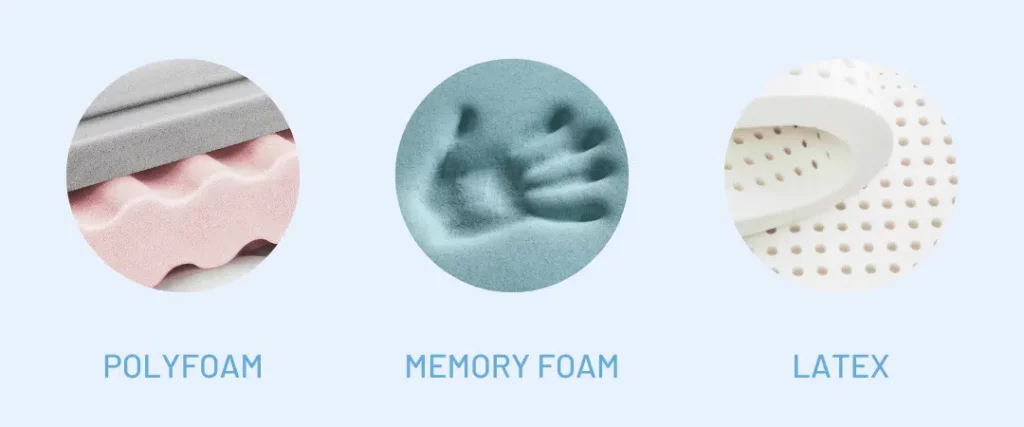
Memory Foam
Memory foam mattresses are also made of polyurethane. They are mixed with additives to increase their density and overall feel. This kind of foam moulds easily to the sleeper’s body for excellent pressure relief, springing back to shape once pressure is removed. Standard memory foam is quite dense and often traps heat.
Gel visco or gel-infused memory foam springs back faster than standard memory foam. Manufacturers infuse gel beads or pods into the foam to absorb heat and reduce pressure. These types of mattresses usually feel much cooler to the touch and offer improved support.
Latax
Mattresses made of latex are noticeably heavier than other types of foam beds. They are quite dense, and therefore known for trapping heat. Latex mattresses are popular for their hypoallergenic properties and soft-to-the-touch surfaces. Synthetic forms of latex are used in mattresses as well, ideal for those with latex allergies.
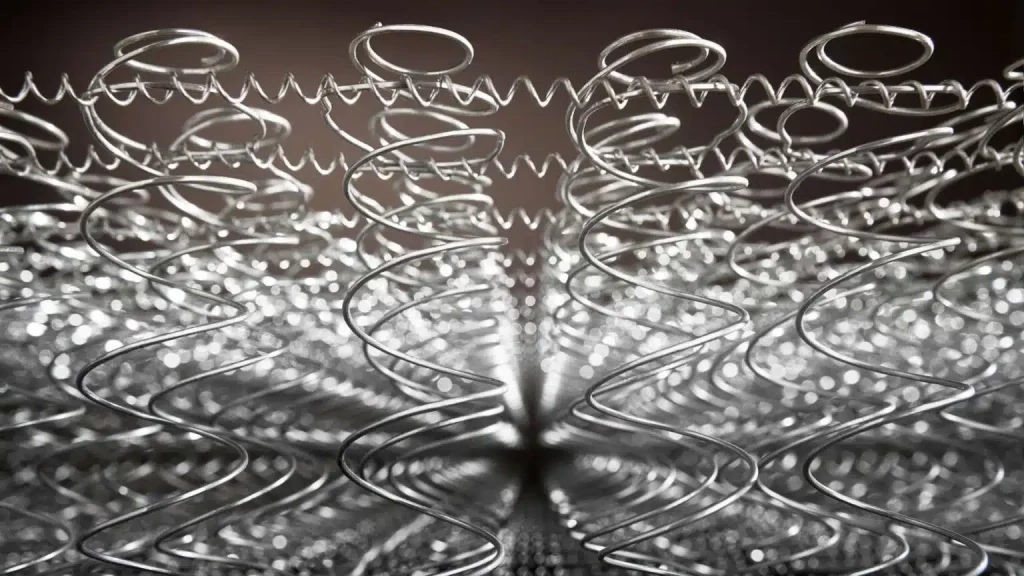
What is a spring mattress?
Spring mattresses use metal springs or coils to form a supportive layer beneath the top cushion. Also known as an innerspring mattress, this type of bed offers superior back support when constructed with quality materials.
Pocket coils
Pocket coils are individual springs, each wrapped in a fabric casing and then sewn together in rows. Because of their isolation from one another, these coils respond independently to pressure and movement. As a result, pocket coils feel responsive and somewhat bouncy, but they may be prone to sagging as they lose their tension.
Bonnell coils
The Bonnell coil is the oldest type of spring used in mattresses. Originally adapted from buggy seats in the 19th century, this coil has an hourglass shape with knotted, rounded edges. They are laced together to form a spring unit and are used widely in more affordable beds.
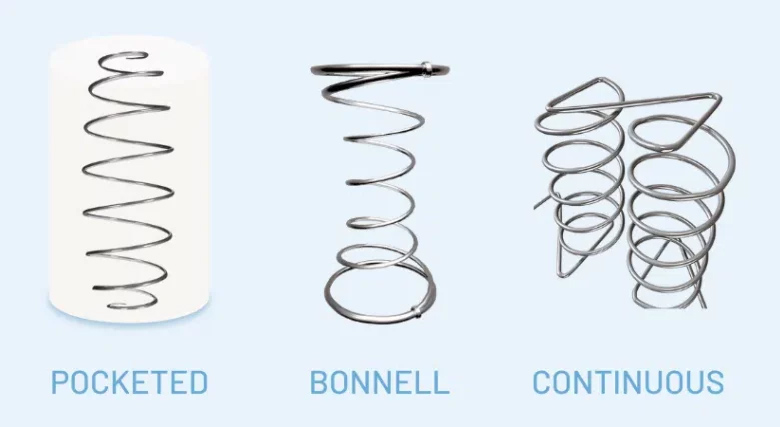
Continuous coils
Continuous coils (also known as Miracoil springs) are made of a single wire that is shaped into a row of coils. As the coils are fundamentally all the same structure, sleepers experience less motion transfer as a partner shifts and moves than they might with other coils. The unfortunate side effect is reduced responsiveness and conformance to the body.
Sealy Posturepedic Coils
Here at Sealy, we have a long history of innovation and research. We have spent countless hours designing, testing and refining our coil technology to deliver the world’s most advanced sleep system. Here at Sealy, we have a long history of innovation and research. We have spent countless hours designing, testing and refining our coil technology to deliver the world’s most advanced sleep system.
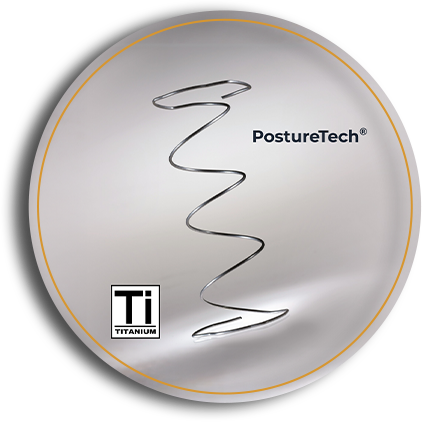
PostureTech .
The spring design is based on the principle of “Sense and Respond.” The sensing arm of the spring automatically adjusts the level of support based on the weight and pressure of different parts of the body.
Available in:Posture Premier Collection、PostureLux Collection、Hotel Resort Collection

AlignSupport™
The patented AlignSupport™ titanium-alloy spring system features two-stage support that enhances responsiveness and stability. It naturally adapts to body weight, delivering a gentle cushioning effect.
Available in:Premium Collection、Hotel Signature Collection

ReactSupport™
The newly enhanced, highly responsive ReactSupport™ patented two-stage spring system improves comfort and body-conformance by up to 14%, while also providing additional pressure relief.
Available in:Prestige Collection、Connoisseur Collection
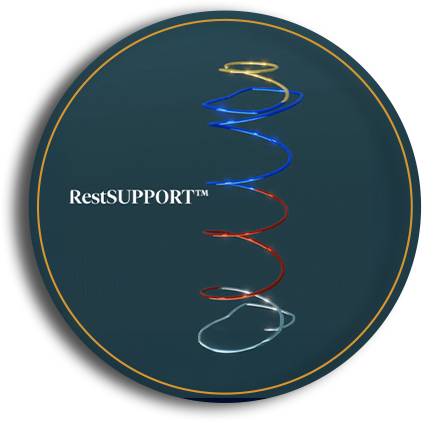
RestSUPPORT™
Revolutionary three-stage coil system provides the balance you need for a deeper, more luxurious rest. The Synerflex® surface reacts to your contours, allowing maximum pressure relief, while the inner coil senses your weight and responds. The core of the coil provides deep down support to help maintain your body’s natural alignment and assist in ensuring a deep, restorative sleep.
Available in:Heritage Collection、Palatial Crest Collection
Differences between spring and foam mattresses
Different mattress types vary in some ways and overlap in others. To help you choose between the two, we have compared some common features and how they present in both foam and spring mattresses.
| FEATURES | Foam mattress | SPRING |
|---|---|---|
| Sleep position | Ideal for side sleepers | Ideal for all positions |
| Back support | Moderate support | Best for spinal alignment |
| Odour | Some foams experience “off-gassing” | New mattress scent only |
| Temperature | Denser foams trap heat | Free air flow in innerspring units |
| Durability | Low density foams: fair (5-7 yrs) Memory foam/latex: high (10-15 yrs) | Moderately durable (7-10 years) |
Sleep position
Your sleep position may dictate the type of mattress that is best for you. Those who sleep on their side, for example, typically place extra pressure on the heaviest points of the body — the shoulders and hips. In order to alleviate these pressure points, side sleepers ought to choose a mattress with a plush feel or extra cushioning. So long as it has sufficient spinal support, a foam mattress may be an ideal choice; likewise, a plush or medium spring mattress can offer the same benefits for side sleepers as long as the comfort layers are soft enough.
Back support
While foam mattresses are designed to cushion the body, they do not always have the necessary support structures to maintain spinal alignment over time. Look for high-density foams and thick layers, or support structures such as gel pods, springs or a hybrid design. Generally speaking, spring mattresses are designed to alleviate backache and provide support, but as with foam, the quality of the materials is a crucial factor in gauging effectiveness.
See how Sealy works withThe Orthopaedic Advisory Board.
Odour
Most mattresses emit an odour when they are first removed from packaging and placed in the home. See how Sealy works with the Orthopaedic Advisory Board. However, foam mattresses are particularly prone to ‘off-gassing‘, a term given to the breakdown of volatile organic compounds (VOCs).
This process is simply a side effect of synthetic materials like polyurethane being unwrapped and releasing vapours into the air. While it does not pose a specific health risk, off-gassing may disturb those who are sensitive to smells or those with difficulty breathing. The smell is unpleasant, but it typically dissipates within several days to weeks, depending on the materials inside the mattress.
Temperature
Except for pocket coils, most spring mattresses naturally allow air to flow freely on the inside of the bed, reducing heat retention. Sealy Smartex® treatment that helps dispersing heat and moisture so you can sleep more comfortably. Foam mattresses are usually quite dense and classic memory foam mattresses are known to trap heat.
Durability
Regardless of which type of mattress you prefer, it is important to choose a mattress made with high-quality materials. Low-density foams lose their shape quickly, while poorly made springs lose tension and may sag over time.
If you prefer the feel of a foam mattress, look for one that features high-density, high-quality foams that have a warranty for several years. Likewise, if you are shopping for a spring mattress, opt for high-quality, thicker springs that are backed by a quality guarantee.
Other things to consider in choosing your best mattress
Your ideal mattress can shift over time as a result of changes to your physical needs and lifestyle. Consider whether your current mattress still suits you, or if your needs have changed.
Know your usual sleep position and any nightly pain points. For example, if heat is a significant issue, you may wish to avoid foam beds.
Consider whether the mattress will be used by others. Your partner’s preferences may require a specific type of mattress, helping to narrow down your decision.
Which mattress is better for you?
The type of mattress best suited to you depends on your lifestyle, sleep position and overall comfort needs. Choosing a mattress is often a confusing process, and you may benefit from trying the mattress in-store.
You can find your closest store by visiting the Sealy stockist.